Journal · Weather
Questions to ask about a garden event in Malta
Plan the comfortable version of the day and the alternative, before you choose a date.
Leon Attard, events manager · 6 min read
Most of the questions we answer in the first week of planning are about the weather. That makes sense. A garden is the reason people come here, and a garden is outside. The good news is that Malta's seasons are fairly predictable in outline, so you can plan for the likely day and agree an alternative for the unlikely one, both before you commit.
This guide covers what the seasons usually bring, what our pavilion can and cannot do, and the questions we suggest you settle with us and your suppliers. It describes broad patterns, not a forecast for your date.
What the seasons usually bring
Malta's long-term climate records show a clear pattern: hot, dry summers and mild, wetter winters. June, July and August are usually rain-free and the hottest months of the year. Most of the year's rain falls between October and March, often in short, heavy showers and thunderstorms rather than long grey days. April, May and late September tend to be the gentlest months for an afternoon outdoors.
That pattern is why our sample prices have four season bands. They reflect demand, not safety: a November weekday costs less because fewer people ask for it, and it can still be a lovely day with the right plan.
Heat and shade in summer
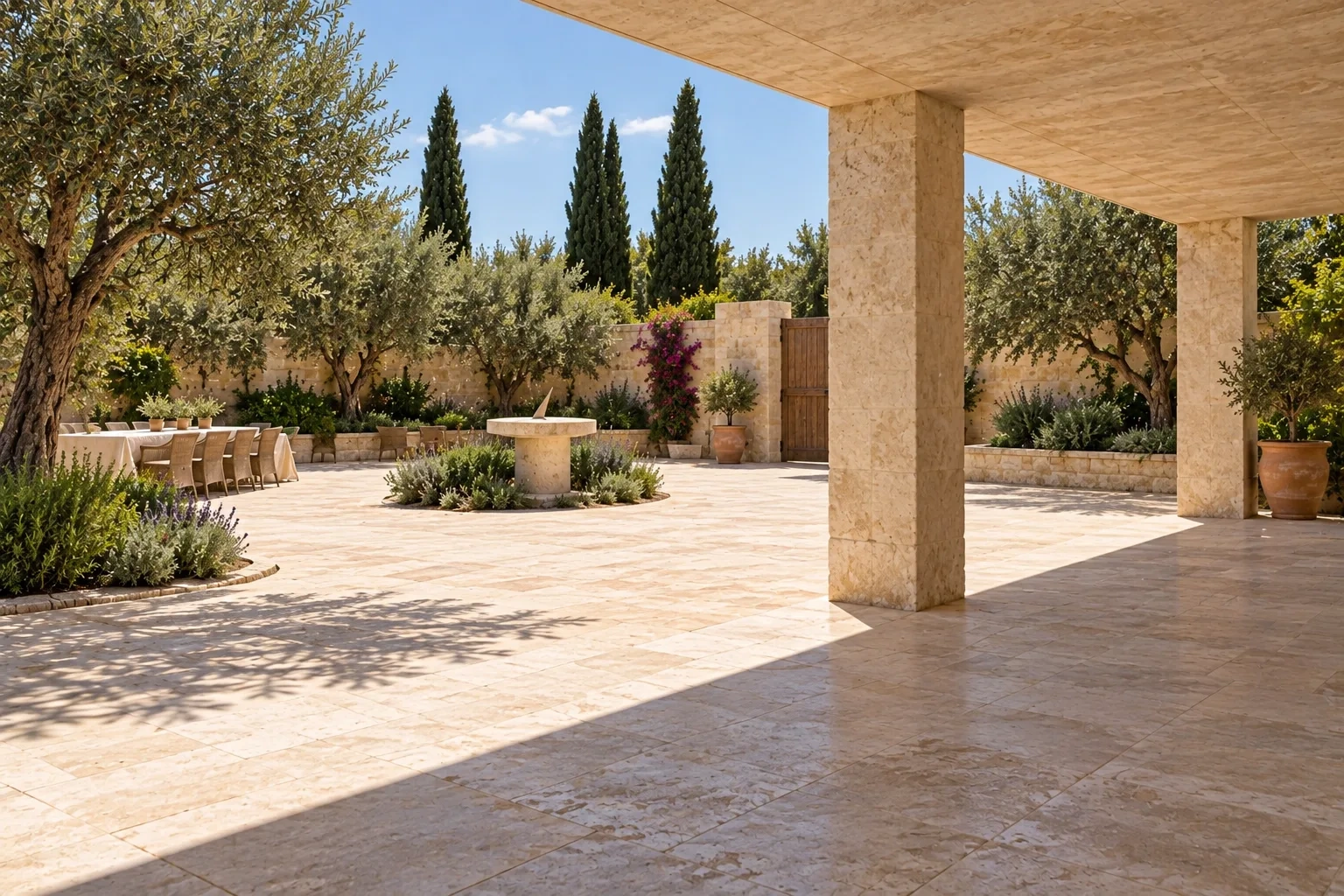
For July and August, the questions are about timing and comfort. A ceremony at three in the afternoon puts guests in full sun on pale stone; the same ceremony at half past five feels very different. Olive trees and the pavilion roof give shade, and a decorative sail covers one corner of the courtyard, but none of them cools the air.
We suggest planning later start times, shaded waiting on arrival, plenty of drinking water and somewhere to sit for older guests and children. Your caterer will have their own views on what holds up in the heat.
Wind, rain and a roof with open sides
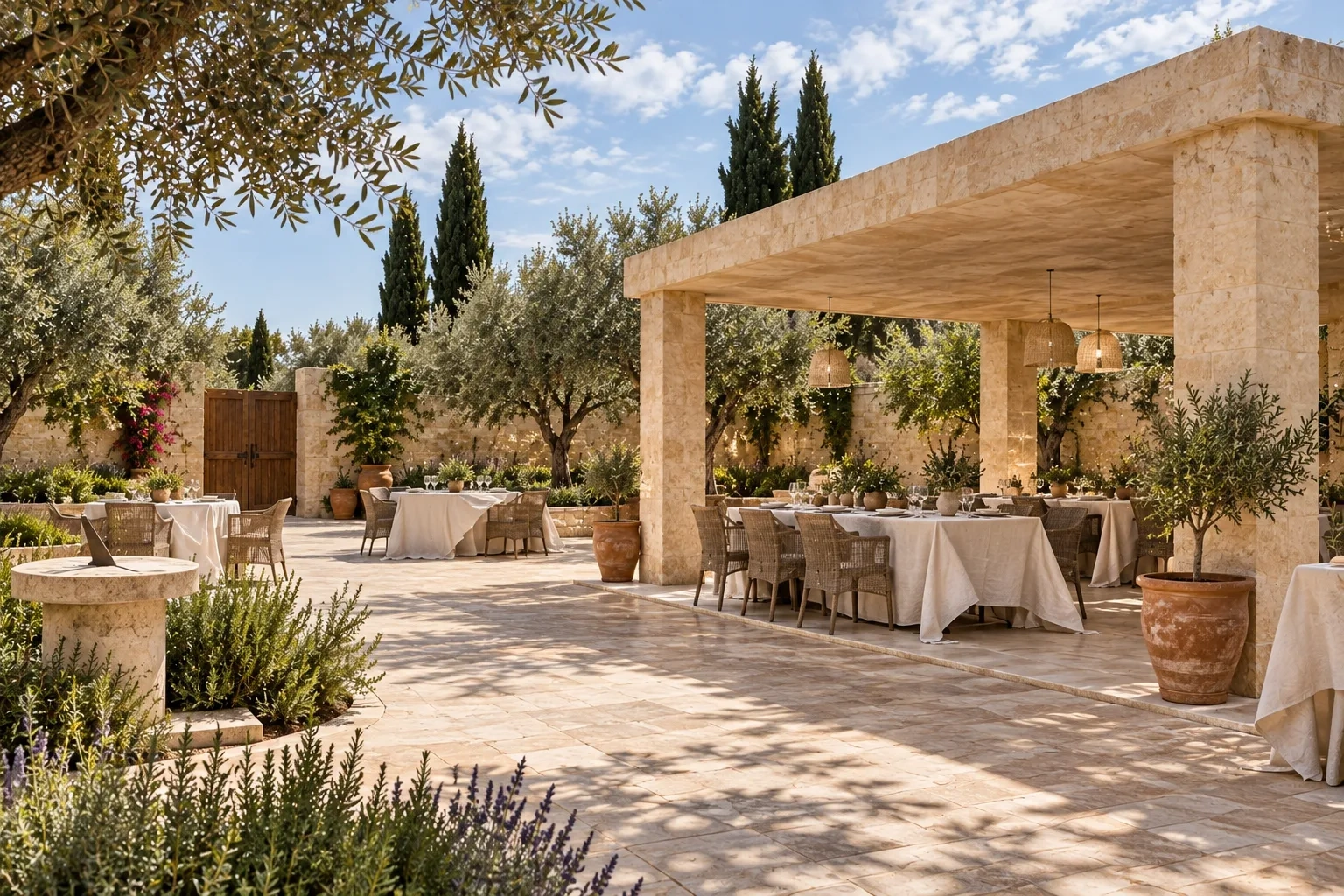
The pavilion has a solid stone roof on square columns and no walls. It gives good cover from sun and light rain. It does not keep out wind, and a heavy storm can blow rain well under its edge. It is not an enclosed shelter, even when your guest count fits beneath it.
Suppliers have limits too. Marquee and sail suppliers, florists and sound engineers each set conditions under which they will not install or operate. Ask them, and tell us, so the plan is built on real numbers.
Winter evenings
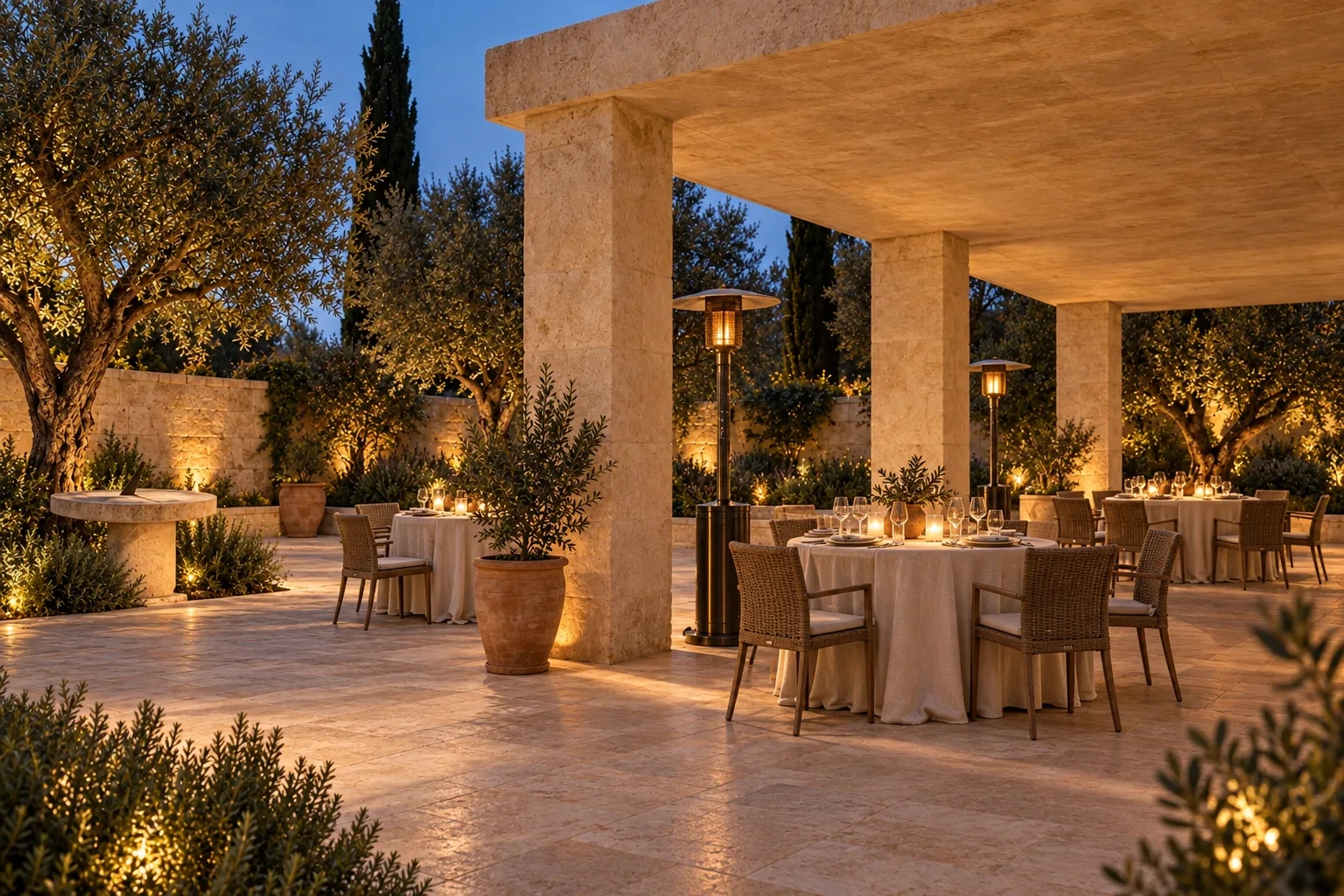
From November to March, evenings are short and cool. A seated dinner for a smaller group under the pavilion works well with heaters and warm lighting from your suppliers. Plan for the possibility of a thunderstorm, and agree in advance who decides to move or postpone, and when.
Five questions to settle before you commit
- How long will guests spend outdoors, and at what time of day?
- What is the alternative arrangement if it rains, and does everyone fit it?
- Which of our suppliers have wind or rain limits, and what are they?
- Who decides on the weather plan, when, and how do guests hear?
- What happens to the date and the costs if the agreed plan cannot run?
In our sample process the coordinator and your suppliers review the plan 72 hours before the event, again on the day, and whenever conditions change. We write down who decides and what the alternative is, so nobody has to improvise on the day.
Source for the seasonal pattern: National Statistics Office, The Climate of Malta (2011), using 1961 to 1990 averages. Broad context only, not a forecast. Ternshade Court is a fictional venue and this guide is written for a Vulpesco demo.